Most Ohio businesses don’t have a cybersecurity problem.
They have a clarity problem.
They’ve bought tools.
They’ve checked boxes.
They’ve been told they’re “covered.”
But if you asked one simple question:
“If something happened tomorrow… are we actually protected?”
Most companies couldn’t answer with confidence.
That’s the gap.
Most organizations investing in cybersecurity eventually realize it needs to be part of a broader managed IT strategy.
Why Cybersecurity services Ohio Is a Different Game
Generic cybersecurity advice doesn’t work here.
Ohio businesses operate in a very specific environment:
- Manufacturing companies running legacy systems tied to production
- Dealerships dealing with financial data, compliance, and vendor integrations
- Professional service firms where trust is the product
- Multi-location operations with inconsistent IT standards
- Growing companies layering cloud tools over aging infrastructure
That mix creates real, practical exposure.
And attackers are targeting it.
For most businesses evaluating cybersecurity services in Ohio, the issue isn’t a lack of tools — it’s a lack of clarity on what actually protects the business.
Recent patterns across the Midwest (including Ohio):
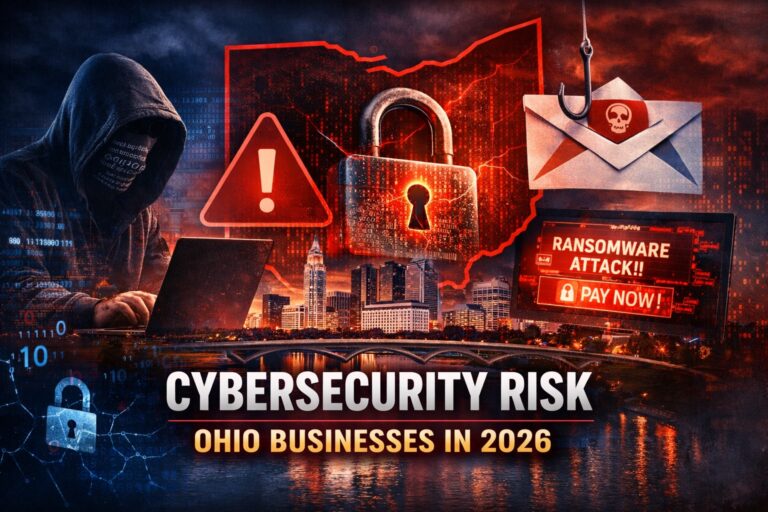
- Manufacturing has been the #1 ransomware target industry globally for 5+ years
- Regional municipalities and small orgs hit with ransomware without recoverable backups
- Business email compromise targeting accounting teams and vendor payments
- Insurance carriers tightening requirements — and denying coverage when controls fail
This is no longer theoretical risk.
It’s business risk.
Many of these risks are preventable when businesses move to managed IT services instead of relying on reactive fixes.
The Real Problem: “We Thought We Were Covered”
This is what we see constantly.
A business has:
- endpoint protection
- backups
- MFA (in some places)
- an IT provider
And leadership assumes:
“We’re fine.”
But when we actually look under the hood:
- MFA is not enforced across all systems
- backup recovery hasn’t been tested recently
- admin access is broader than it should be
- security alerts aren’t actively reviewed
- vulnerabilities are sitting unresolved
Everything looks good… on paper.
That’s exactly how companies get hit.
Without consistent oversight, even the best tools fail — which is why proactive IT management is critical.
A Real Scenario (What This Actually Looks Like)
A mid-sized Midwest manufacturer gets hit with ransomware.
They had:
- backups running
- antivirus installed
- an IT provider
What went wrong?
- Backups were not isolated properly
- No recent recovery testing
- Admin access allowed lateral movement
Result:
- production stopped
- systems locked
- recovery took days
- financial + operational impact significant
This is not rare.
It’s what happens when cybersecurity is partial instead of complete.
What Good Cybersecurity Actually Looks Like (No Fluff)
Forget vendor checklists.
Here’s what actually matters in a working environment.
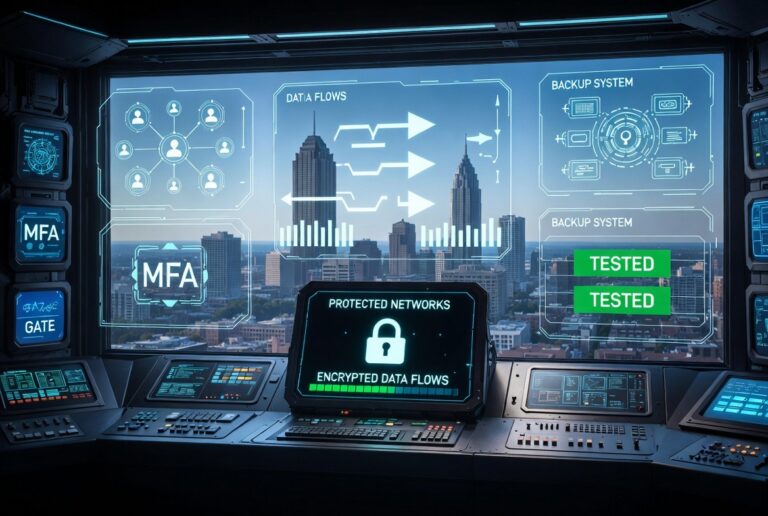
Access is controlled everywhere
Not just email.
Admin accounts, remote access, internal systems… all locked down.
If someone gets in, they don’t get far.
Backups are tested, not assumed
If recovery hasn’t been tested recently…
You don’t have a recovery plan.
You have a guess.
Someone is actively watching the environment
Not tools running.
Actual monitoring.
Actual response.
Security without visibility is just noise.
Employees are trained in real-world scenarios
Phishing is now AI-generated and highly convincing.
Annual training is not enough.
People need current, relevant exposure.
Risk is understood clearly
This is the difference-maker.
Most companies install tools before understanding:
“Where are we actually exposed?”
Without that, everything stays reactive.
2026 Reality: What’s Changed
This is where most blogs fall behind.
Here’s what is actually happening now:
AI-driven attacks are working
Phishing emails are no longer obvious.
They are clean, contextual, and targeted.
Insurance is enforcing cybersecurity
Carriers are now asking:
- Is MFA fully enforced?
- Are backups tested?
- Are controls documented?
If you can’t answer clearly:
👉 You pay more
👉 Or you don’t get covered
Downtime is now the real cost
It’s not just about data anymore.
If systems stop:
- operations stop
- revenue stops
- customers feel it
Cybersecurity = business continuity
Where Most Setups Break (And Why)
Not because nothing exists…
Because no one owns the system.
You’ve got:
- one vendor for email
- one for backups
- one for devices
But:
👉 no unified visibility
👉 no consistent enforcement
👉 no accountability
That fragmentation is where risk lives.
This is why many Ohio businesses move toward managed IT services that integrate security from the ground up.
Quick Self-Audit (Use This)
If you want clarity fast, answer this:
- Is MFA enforced everywhere… or just email?
- When was the last full backup recovery test?
- Who reviews security alerts daily?
- Could you explain your incident response plan right now?
- Are vulnerabilities actively fixed… or just identified?
- Would you pass a cyber insurance review today?
If those answers aren’t clear…
That’s the gap.
What Cybersecurity Services in Ohio Should Actually Deliver
Not more tools.
Not more dashboards.
You need:
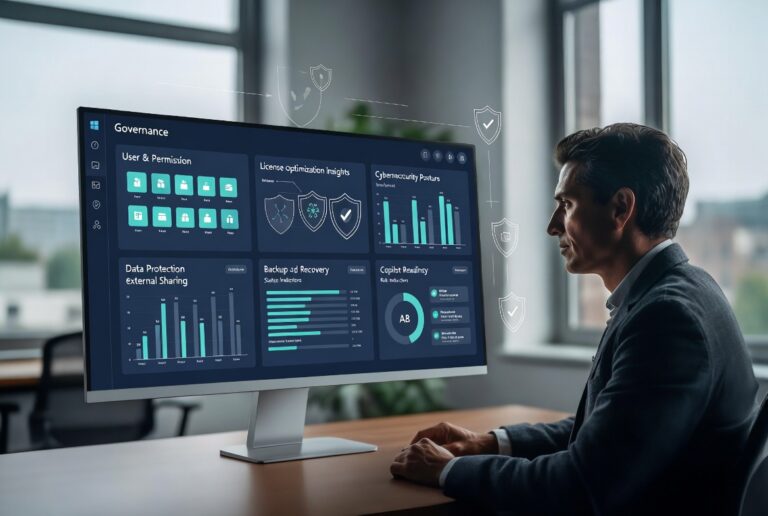
- visibility into real risk
- systems that are actually enforced
- accountability across the environment
- protection that holds under real pressure
That’s where structured Cybersecurity Services become critical — especially when they’re integrated into broader Managed IT Services and supported by tested Backup and Continuity.
Because this isn’t one tool.
It’s a system.
Preventing these issues starts with proactive IT management that identifies threats before they impact operations.
If you’re evaluating security at a service level, see how it fits into broader coverage here: cybersecurity services Ohio.
What Happens Next
If you’re unsure where things actually stand…
the next step isn’t buying more tools.
It’s understanding what’s actually happening inside your environment.
👉 Start with a cybersecurity review and get a clear picture of what’s protected, what’s exposed, and what needs to be fixed.
For a breakdown of how these risks impact operations, see: cybersecurity risk Ohio businesses.